
AI data centres
Electricity supply, locational factors, and climate change

[Some years ago, I had a heated debate with someone over the meaning of ‘critical thinking’ and how it should be applied in schools. That person was the Principal Examiner for the then OCR examination on ‘Critical thinking’. The recent post by Ritchie Cunningham on Critical thinking in Geography provides a useful strategy for those of us who struggle to understand what it is. You can find the post here.
Meanwhile, the ‘Orange Wrecking Ball’ (courtesy of Anthony Scaramucci) is causing havoc in the middle east, and across the world, without any clear strategy as to why he is doing this, or how to end it. The consequences are ever-increasing – is Epic Fury becoming more Epic Failure? AI data centres in the region are likely to be affected greatly.
Much of this post is adapted from materials produced by Geography Review.]
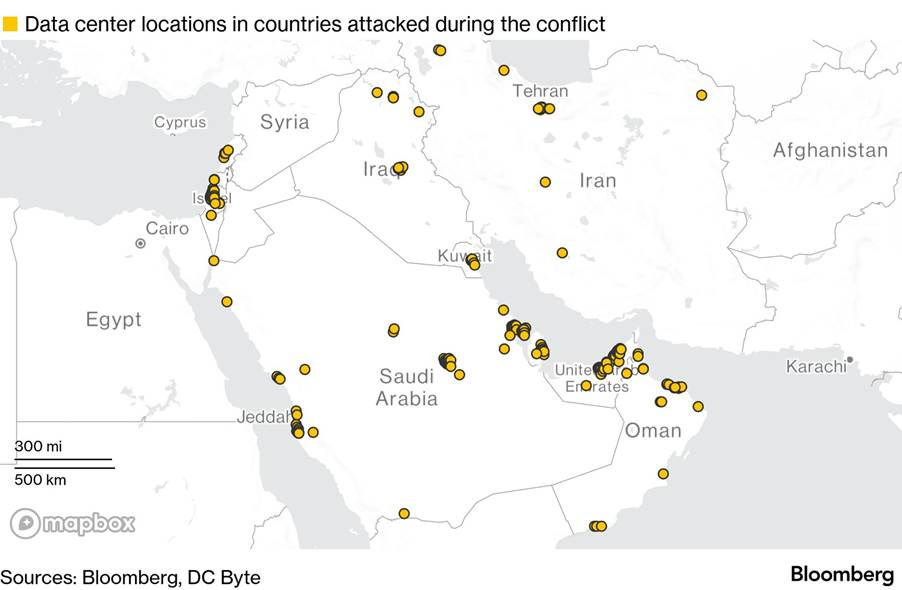
The current war being staged in the middle east between Israel, the USA and Iran has impacted on AI data centres in the region. The map below shows the location of data centres in the region – the digital economic fallout of the conflict is likely to be significant. [Note the number of data centres in the UAE and other Gulf States.]
What is AI?
The prospect of artificial intelligence (AI) dominates economic news. AI comprises digital systems and devices that can perform tasks characteristic of human intelligence – namely, learning (from data and experience), problem-solving and decision-making. For instance, AI often takes the form of virtual assistants and is the ‘brain’ of self-driving vehicles. Major technology companies such as Nvidia and Google are promoting its use in business, in government, in the military, in public service provision, in education and in everyday life.
Issues
One concern is the speed and scale of the AI roll-out, notably its capacity to replace hundreds of millions of jobs by automating them. Another issue is the enormous energy demands of maintaining AI systems. Thousands of new ‘data centres’ are being built around the world to allow AI to become embedded in all areas of human life (see photo below). These centres contain hardware that can handle enormous volumes of data storage and processing.
The energy requirements of a single centre are equivalent to those needed to power a small English town and cooling facilities are needed at each centre. This energy demand is invisible to us when we use ChatGPT on our mobile phones. Given that most energy is still generated by burning fossil fuels, the roll-out of AI poses a climate change challenge. Hence, it puts pressure on most governments (not the USA) to accelerate the use of renewables in national energy systems. AI demands a world of increased not reduced energy supply.
Google data centre – Cheshunt, Hertfordshire.

The link to Global systems
• Data flows are as vital as movements of goods, money, people and ideas in global systems.
• Digital networks enable instant communication, coordinate trade and finance, shape culture and support decision making.
• Their speed and scale intensify interdependence, inequality and vulnerability, making governance and security key concerns today.
Data centres
• Data centres are the physical backbone of the digital AI economy, storing and processing vast quantities of information every second.
• They are the locations where data is stored and accessed by internet users. The ten largest server farms in the world are in the USA – but many more exist globally to meet growing demand for AI services.
• Data centres are usually built in places with reliable electricity, strong internet connections and cool climates (though not always – see below) that reduce the need for energy-intensive cooling.
• Governments compete to host data centres because they bring investment, infrastructure and skilled jobs.
• The number of data centres worldwide is growing rapidly as demand for AI, cloud computing, and digital services increases.
Data centre case study: Luleå, Sweden
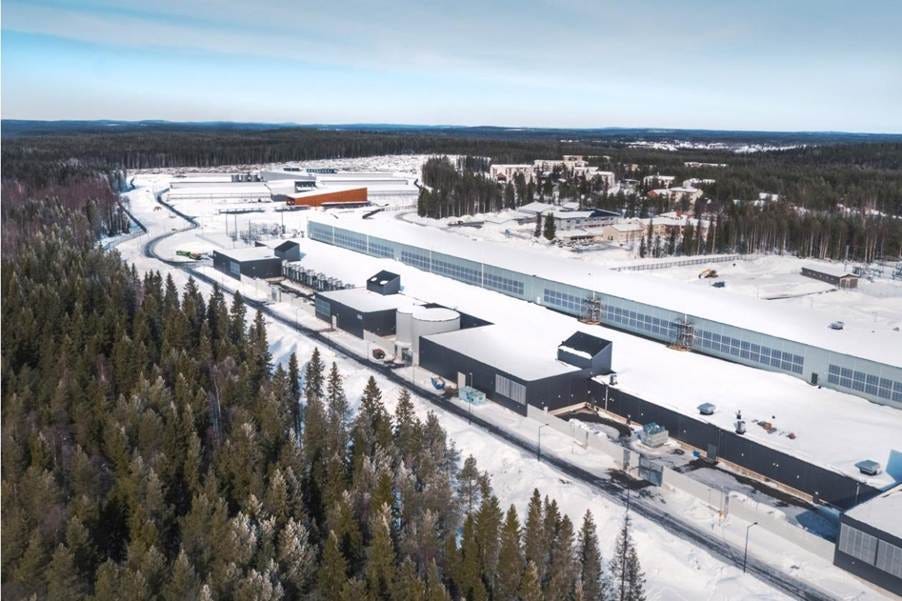
• Luleå in northern Sweden is a data-centre hub [owned by Meta (Facebook)] – see photo below. The cold climate lowers cooling costs, while abundant renewable hydroelectric power reduces carbon emissions.
• Located 100 km south of the Arctic Circle, this has a subarctic climate with short, mild summers and long, cold and snowy winters.
• Winter temperatures are below freezing; summertime highs rarely climb above 25C. For around eight months, the high-power computer equipment will cool itself at no cost using the icy outside air.
• The low relief site also offers flat land with room for expansion.
AI and climate change
• As most global energy still comes from fossil fuels, expanding AI infrastructure risks increasing greenhouse gas emissions.
• Some data centres in the USA are even located near coal- or gas-fired power stations, potentially undermining climate-reduction efforts. There is controversy here where local domestic electricity charges have increased due to the presence of data centres.
• Although AI was not created to solve climate change, its growth could indirectly push faster action toward cleaner energy systems.
What next?
• Some technology investors, including Elon Musk, have discussed the possibility of building data centres in space.
• Space-based facilities would use solar energy and reduce pressure on Earth’s power systems, but this would raise major technical, economic, and legal challenges.
• Outer space is a global commons, meaning it belongs to all humanity rather than any single country or company. Expanding digital infrastructure into space should therefore require international cooperation, regulation and debate about fairness, access and environmental responsibility.