
An African themed post
GERD, urbanisation, and international migration

[First a few recent Substacks that have caught my eye:
Population: Geoff Gibson’s latest post on the demographic issues facing China
China has a looming demographic crisis - by Geoff Gibson
For the Carbon cycle: Hannah Ritchie’s Substack post on contrails:
Eliminating contrails from flying could be incredibly cheap
Plus, several teachers from around the world have recently signed on here, so can I recommend two Substacks for Geography teachers?
Alan Parkinson’s Substack:

Richard Allaway’s Substack: How do you know what you don’t know? | Richard Allaway | Substack ]
Ethiopia: The GERD HEP dam is complete
[Also see a previous post here. ]
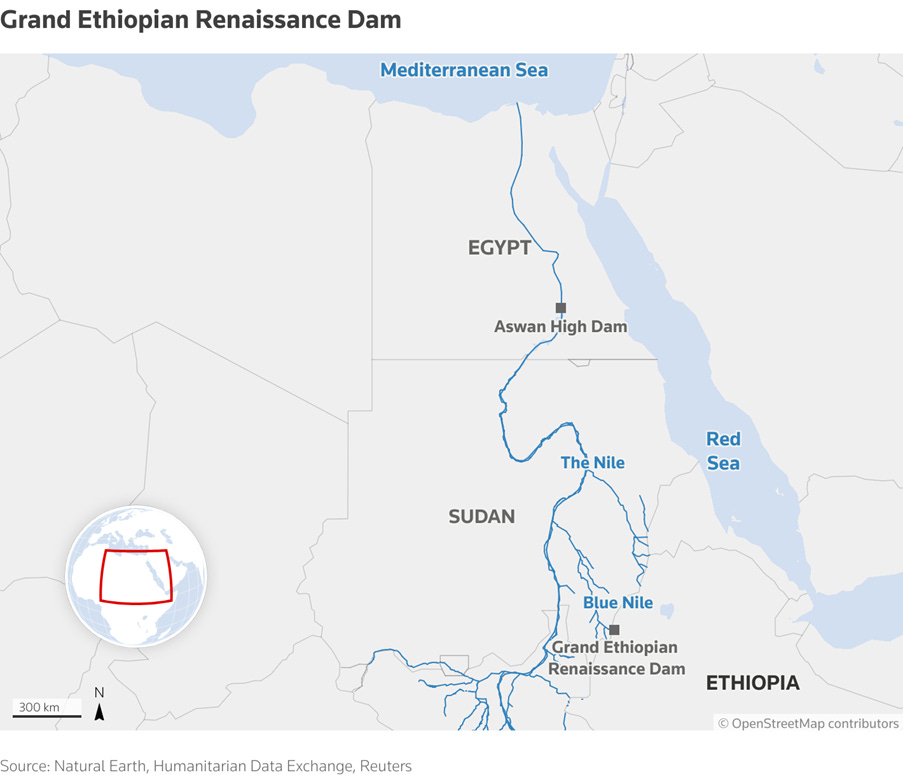
Ethiopia has finally inaugurated Africa’s largest hydroelectric dam on the Blue Nile, as the $5bn Grand Ethiopian Renaissance Dam (GERD) project continues to create tensions with downstream neighbours Sudan and Egypt.
Sudan and Egypt have opposed the dam’s construction from its inception in 2011, arguing the project violates water treaties dating back to the British colonial era and poses ‘an existential threat.’ Egypt, for instance, fears the GERD could restrict its water supply during periods of drought. Despite potentially benefitting from better flood management and access to cheap energy, Sudan has joined Egypt’s calls for legally binding agreements on the dam’s filling and operation. In 2020, Ethiopia began incrementally filling the reservoir while arguing that the dam would not significantly harm downstream countries.
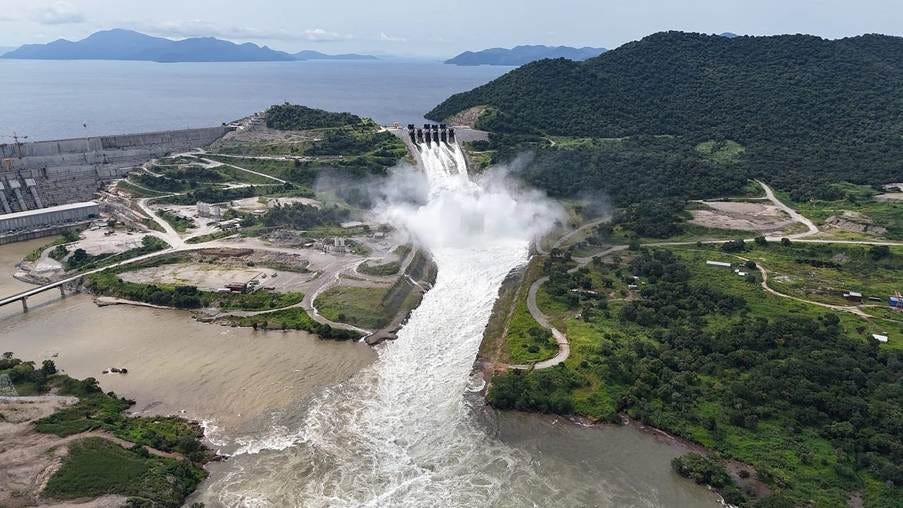
Image: WeBuildValue
Urbanisation in Africa
Since 1980, Africa’s population has tripled to 1.5 billion people, representing the fastest growth than any other continent. It is likely that this trend will continue. Most other countries around the world are experiencing stagnant or declining populations.
It is estimated that Africa’s population will grow to 2.5 billion by 2050, with more than 80% of the increase concentrated in cities. The continent’s fast-growing cities are expected to bring huge changes, including a possible 12-fold increase in urban land area by 2030.
Some geographers expect to see some of Africa’s fastest growth rates in what they describe as ‘secondary cities’ - those that are larger than 100,000 people and regionally important but not the largest in a country. This will likely be accompanied by unplanned ‘spontaneous’ settlements - areas where the population is growing faster than the city can provide infrastructure and services like roads, water, sanitation, schools, and electricity.
Mekele, Ethiopia
One example of a secondary city is Mekele, Ethiopia. This city is in the highlands of northern Ethiopia in the Tigray region.
Mekele
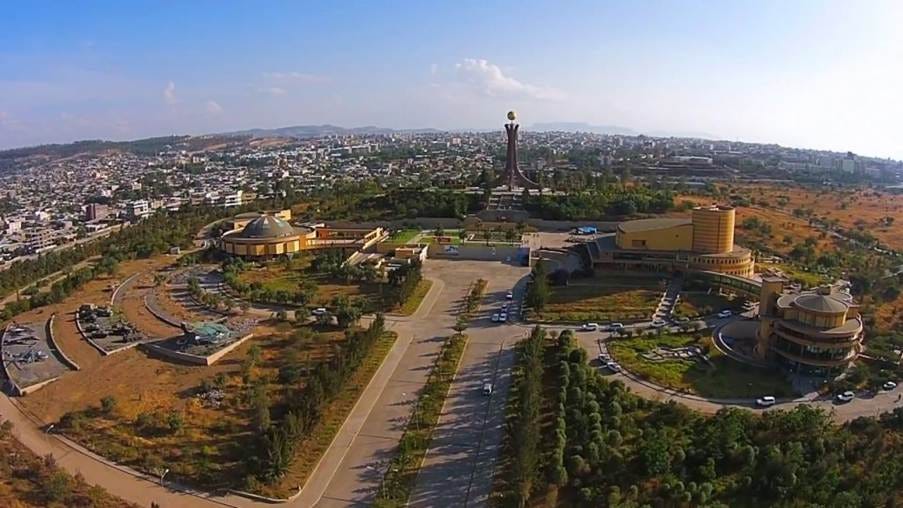
Historically, Ethiopia has been one of Africa’s least urbanised countries. However, in recent decades, urbanisation has accelerated, with many Ethiopians moving from rural areas to rapidly growing towns and small cities. Mekele has changed from a town of 60,000 people to a city of more than 500,000, complete with heavy industry, an airport, a cement plant, and large-scale planned residential neighbourhoods.
In recent decades, planned development has appeared in the form of large, regularly spaced buildings in grid patterns around straight roads on rectangular blocks. As the photo above shows, there is also some urban planning of civic buildings. In addition, many informal, unplanned settlements have sprung up around the planned settlements, especially on the outskirts of the city.
The U.S. deports migrants to Eswatini
A group of 10 migrants deported from the United States arrived this week in Eswatini, following five other deportees transferred there in July. The individuals deported to Eswatini are from Vietnam, the Philippines, Cambodia, Jamaica, Laos, Cuba, and Yemen.
Human rights groups have condemned the treatment of the first group of deportees sent to Eswatini, saying they were kept in solitary confinement and refused access to lawyers. Eswatini’s government said the individuals would be kept in prison facilities until they could be repatriated to their home countries.
Amid its mass deportation push, the Trump administration has increasingly relied on sending deportees to third countries when it cannot legally send them to their homeland. The U.S. government has also sent ‘third country’ deportees to Africa: to South Sudan, Ghana, and Rwanda.
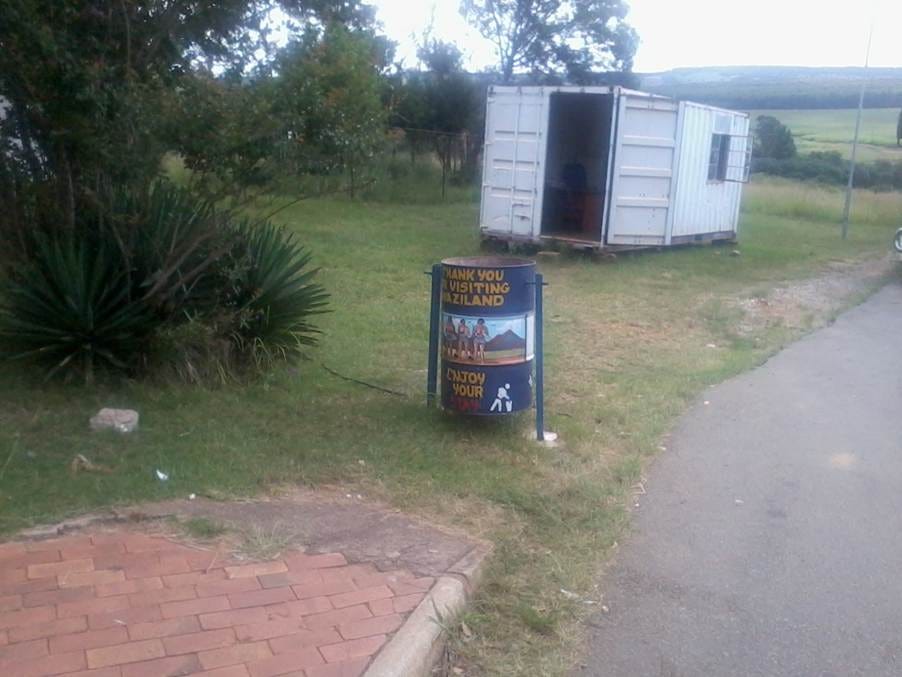
[This post allows me to show a photo I took 10 years ago at the border between Eswatini (formerly Swaziland) and South Africa. I trust the customs arrangements are a little more sophisticated today……]
Mekele’s unplanned settlements in the outskirts of the old town are also heavily due to the conflict in the last four years. When I was there after couple of months after the onset of the crisis, there were already some thousands people displaced there.
Dear David, thank you so much for the updates. I really appreciate them a friend of mine who had just gotten back from the idiot Pakistan border told me that the ceremony had been stopped. I will now update that in the post. It's quite remarkable that something that has gone on for so long in previous appeals can't go on now.
The information about Esther Rantzen is melancholy. If you have a link to her petition I'll include it in the post and mention it too.
Thank you again for being such a good reader